

Every flight begins long before the aircraft takes off. Routes have to be planned, weather conditions reviewed, fuel requirements considered and operational information checked before the journey can proceed. One of the aviation professionals involved in this behind-the-scenes process is the flight dispatcher. Understanding flight dispatcher roles and responsibilities can help students discover an aviation career that is different from becoming a pilot or cabin crew member. Flight dispatch is primarily a ground-based operational role involving planning, monitoring, communication and coordination. For students completing Class 12, graduates exploring aviation careers, and parents researching career options, this guide explains what a flight dispatcher does, the skills involved, career scope in India and how relevant training can help students prepare for the field.
What Does a Flight Dispatcher Do?
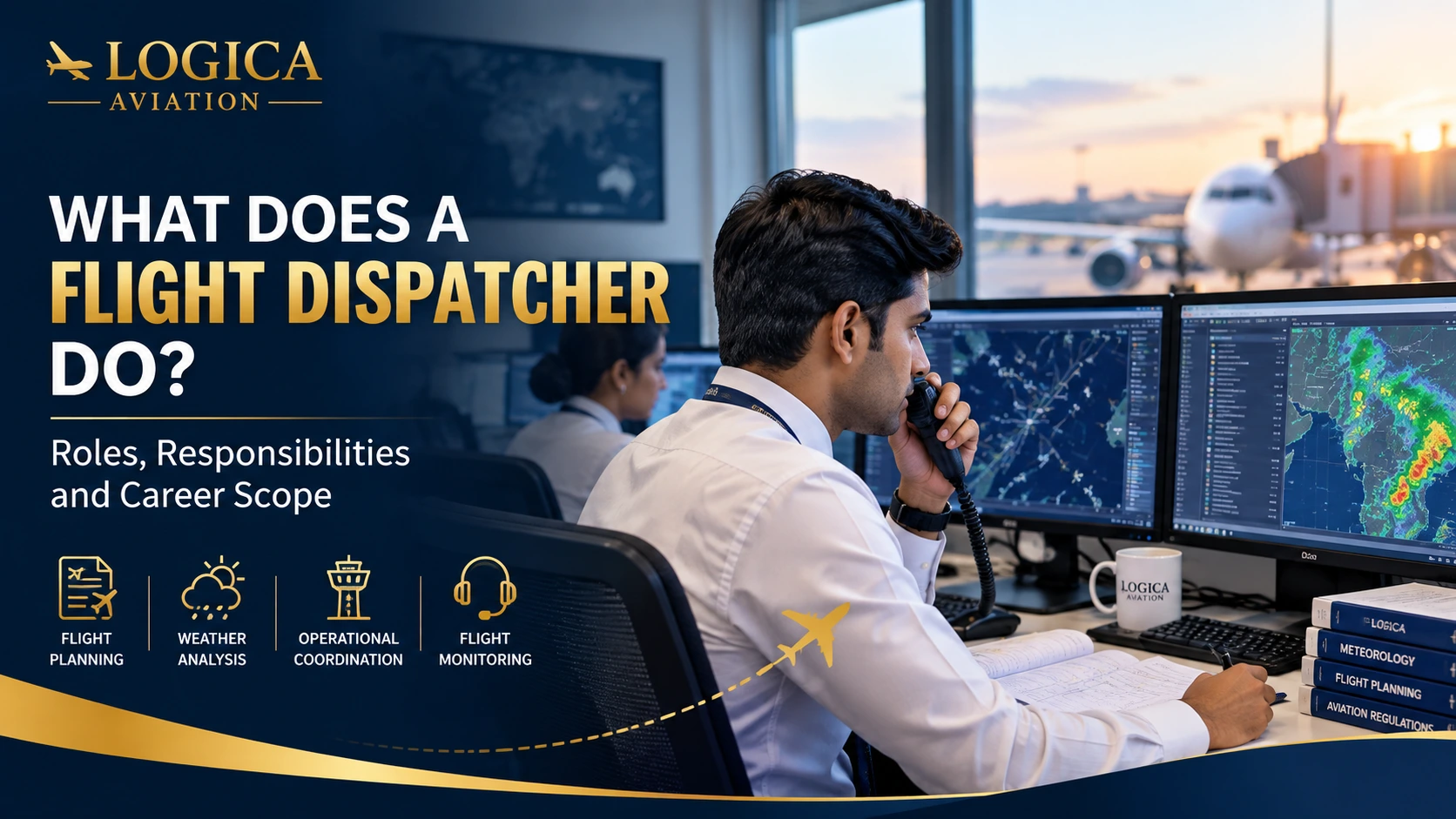
A flight dispatcher is an aviation operations professional who supports the planning and monitoring of flights from the ground. The role involves working with operational information such as routes, weather conditions, fuel considerations, airport information and flight progress. Flight dispatchers also coordinate with pilots and other operations personnel to ensure that relevant information is available for flight planning and ongoing operations. In simple terms, pilots operate the aircraft while flight dispatchers support the planning and operational processes behind the flight.
How Does a Flight Dispatcher Work With Pilots and Airline Operations?
A flight dispatcher works closely with pilots and airline operations teams to maintain clear communication throughout a flight’s journey. Rather than working independently, the dispatcher acts as a key connection between the flight crew and different ground-based departments. This Coordination may involve :
- Sharing important updates with pilots when conditions change.
- Communicating information between the flight crew and the Operations Control Centre (OCC).
- Coordinating with ground handling, maintenance and crew scheduling teams when required.
- Helping different departments stay informed during delays, diversions or schedule changes.
- Providing pilots with updated information that can support informed decision-making.
- Maintaining clear communication when unexpected situations affect a flight.
This teamwork helps pilots and ground teams stay connected, allowing the airline to respond efficiently to changing situations while maintaining safe and well-coordinated flight operations.
Flight Planning and Operational Preparation
A flight dispatcher plays an important role in preparing a flight before departure. The dispatcher reviews the proposed route, weather conditions, airport information, airspace restrictions and aircraft operational requirements. Based on these factors, they help develop a suitable operational flight plan and coordinate important flight information with the flight crew. Dispatchers also evaluate alternative routes and suitable airports when conditions could affect the original flight plan. Careful preparation helps ensure that the flight plan is practical, compliant and suited to the expected flying conditions.
Skills and Knowledge Required for Flight Dispatch
Flight dispatch combines technical aviation knowledge with analytical and communication abilities. A student does not simply need to learn aviation terminology; they need to understand how information can be interpreted and applied to operational situations.
Some important areas of knowledge include:
- Flight planning and route analysis
- Aviation meteorology
- Navigation fundamentals
- Fuel-planning concepts
- Aircraft performance concepts relevant to operations
- Aviation regulations and procedures
- NOTAM interpretation
- Flight monitoring
- Operational communication
- Aviation safety awareness
Important Flight Dispatcher Skills
Technical knowledge becomes more useful when combined with the right professional skills.
| Skill | Why It Matters in Flight Dispatch |
| Analytical thinking | Helps interpret weather, route and operational information together |
| Attention to detail | Important when reviewing flight information and documentation |
| Communication | Helps convey relevant information clearly to flight crews and operations teams |
| Situational awareness | Helps recognize important changes affecting ongoing operations |
| Time management | Useful in an environment where multiple operational tasks may have deadlines |
| Problem-solving | Helps assess changing situations and support appropriate operational responses |
Flight Dispatcher vs Pilot: What Is the Difference?
Although pilots and flight dispatchers both work within flight operations, their roles are different.
| Flight Dispatcher | Pilot |
| Primarily works on the ground | Works primarily from the aircraft cockpit |
| Supports flight planning and operational monitoring | Operates and commands the aircraft |
| Reviews relevant weather and operational information | Uses relevant operational information as part of flight operations and decision-making |
| Coordinates with flight crews and operations teams | Coordinates with dispatch, air traffic services and other relevant teams |
| Focuses on ground-based operational support | Focuses on safe operation of the aircraft |
Flight Dispatcher Career Scope and Training in India
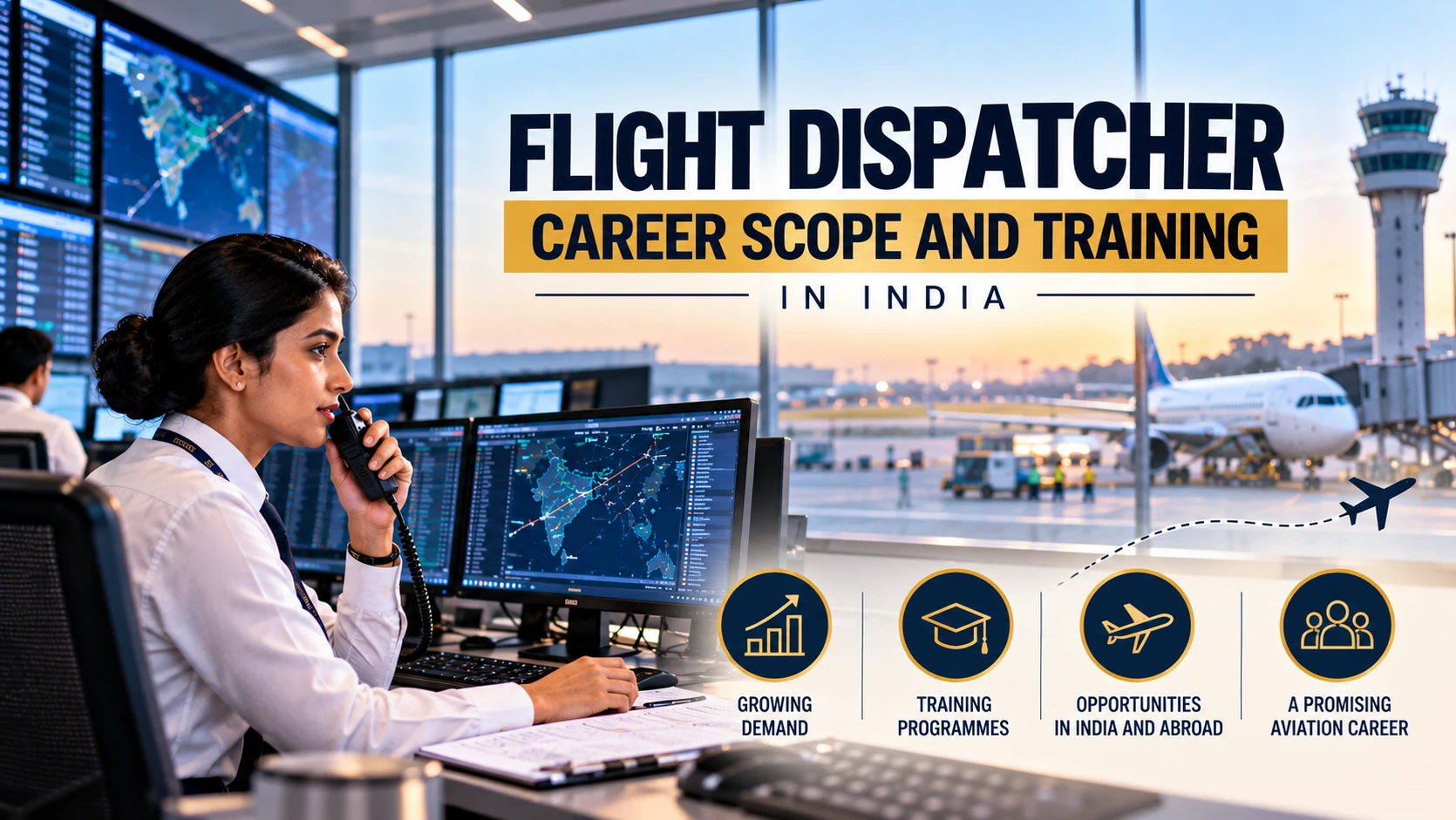
Flight dispatch forms part of the wider airline and aviation-operations environment. Dispatch professionals may work within airline flight-operations departments, operations control environments and other relevant aviation operations settings, depending on their qualifications and employer requirements.
The working environment is generally ground-based and can involve:
- Flight-planning systems
- Weather information
- Operational data
- Communication systems
- Coordination with different aviation teams
- Monitoring ongoing operations
Because airline operations can continue beyond normal office hours, some roles may also involve shift-based working arrangements depending on the employer.
How to Start a Flight Dispatcher Career After 12th
Students interested in flight dispatch can begin by understanding the profession and developing the knowledge required for aviation operations.
A typical learning pathway can be understood as:
Class 12 → Flight Dispatch Training → Technical & Practical Skill Development → Understanding Applicable Requirements → Suitable Career Opportunities
Students considering a flight dispatch program should look for training that develops knowledge in:
- Flight planning
- Aviation meteorology
- Navigation
- Aircraft and operational concepts
- NOTAMs
- Operational procedures
- Aviation safety
- Communication
- Practical flight-planning exercises
Build your understanding of flight planning, aviation operations and the practical skills used in flight dispatch. Explore the Diploma in Flight Dispatch Operations at Logica Training School of Aviation, Chennai to learn more about the course, eligibility and training.
Career Opportunities for Flight Dispatchers in India
Flight dispatchers can explore opportunities within airline flight operations, operations control centres and other aviation support environments, depending on their qualifications, training and employer requirements. The role is particularly suited to people interested in the planning, technical and coordination side of aviation rather than an onboard career.
Potential work areas may include:
- Airline Flight Operations – Supporting flight planning and day-to-day operational activities.
- Operations Control Centres – Monitoring flights and coordinating relevant operational information.
- Flight Planning Support – Working with routes, weather information and other factors involved in flight preparation.
- Operational Coordination – Supporting communication between flight crews and ground-based operations teams.
- Flight Monitoring – Following ongoing operations and identifying relevant changes in weather or operational conditions.
Career progression can depend on technical knowledge, practical experience, performance, additional qualifications and the requirements of individual aviation organisations. Students considering this career should therefore focus on developing strong flight planning, weather interpretation, communication and operational decision-support skills rather than viewing a training programme as a guarantee of employment.
Conclusion
A flight dispatcher is one of the professionals working behind the scenes to support flight operations. From reviewing routes and weather to supporting flight planning, monitoring operational information and coordinating with flight crews, the role requires technical knowledge, accuracy and strong communication.
Understanding flight dispatcher roles and responsibilities is an important first step for students considering this career. Those who enjoy aviation, analytical work, planning and ground-based operations may find flight dispatch worth exploring.
Students interested in developing relevant flight-dispatch knowledge can explore the Diploma in Flight Dispatch Operations at Logica Training School of Aviation, Chennai.
Ready to learn more about Flight Dispatch?
Turn your interest in aviation into practical knowledge with the Diploma in Flight Dispatch Operations at Logica Training School of Aviation, Chennai. Explore the course curriculum, check your eligibility and speak with the counselling team to understand whether flight dispatch matches your career goals.