

Introduction
Are you interested in aviation but unsure which career path to choose? The aviation industry offers several opportunities beyond becoming a pilot. Cabin crew, flight dispatch and airport operations are three career options that suit students with different interests, strengths and professional goals.
Cabin crew members focus on passenger safety and onboard service. Flight dispatch professionals support flight planning and operational coordination. Airport operations professionals help coordinate activities that keep airport services running efficiently.
Each role has different responsibilities, training requirements and working environments. Understanding these differences can help you choose a career that matches your interests and future goals.
In this guide, you will learn how these three aviation careers differ, what skills they require and how to choose a suitable aviation training programme in Chennai.
Cabin Crew vs Flight Dispatch vs Airport Operations: What Makes Each Career Different?
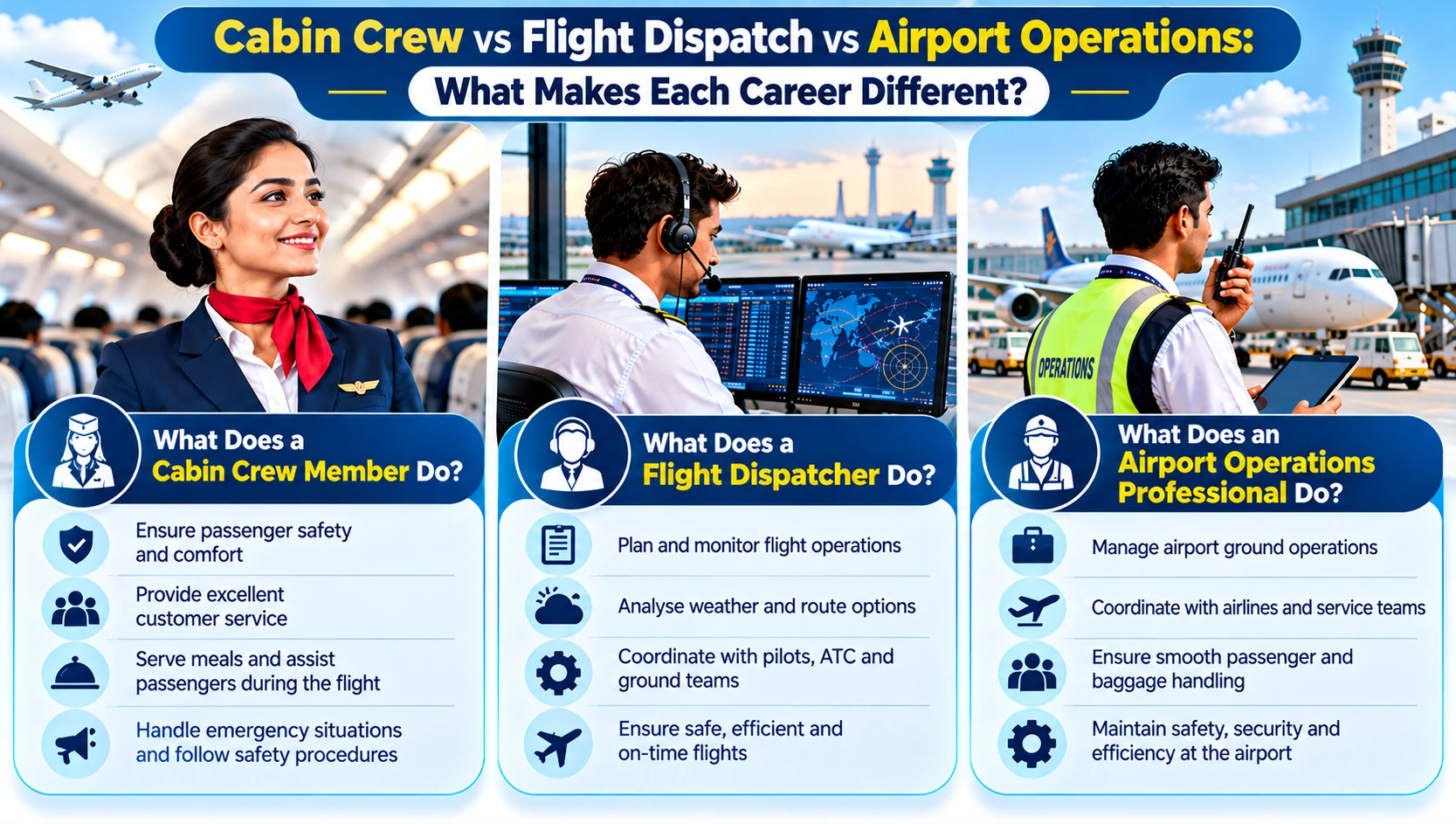
Each aviation career contributes to safe and efficient operations in a different way. Understanding the daily responsibilities can help you decide which role matches your interests.
What Does a Cabin Crew Member Do
Cabin crew members are responsible for passenger safety, cabin preparation and onboard service. They work with other crew members to help passengers travel safely and comfortably.
Their responsibilities may include:
- Following cabin safety procedures.
- Assisting passengers during boarding.
- Providing onboard customer service.
- Communicating important safety information.
- Responding to passenger needs.
- Following airline procedures during emergencies.
Example: A cabin crew member may assist a passenger with seating, explain safety instructions or help address a concern during a flight.
This career may suit students who enjoy communication, teamwork, customer service and working directly with people.
What Does a Flight Dispatcher Do
Flight dispatch professionals support flight planning and operational coordination. Depending on their qualifications and responsibilities, they may work with flight plans, weather information, route considerations and operational updates.
Their responsibilities may include:
- Supporting flight planning activities.
- Reviewing aviation weather information.
- Understanding route and aircraft performance considerations.
- Monitoring relevant operational information.
- Coordinating with flight operations personnel.
Example: When weather conditions change, flight operations teams may review updated information and coordinate appropriate operational decisions according to applicable procedures.
This career may suit students who enjoy technical subjects, analytical thinking, planning and working with detailed information.
Important: Flight dispatcher responsibilities and professional qualification requirements depend on the role and applicable regulations. Completing a training course does not automatically authorise someone to perform regulated duties.
What Does an Airport Operations Professional Do
Airport operations professionals help coordinate activities that support efficient airport services. Their responsibilities depend on the department and employer.
Potential work areas include:
- Passenger and terminal operations.
- Ground handling coordination.
- Airport service support.
- Operational documentation.
- Coordination with airport teams.
Example: An airport operations employee may help coordinate passenger-flow information, communicate operational updates or support the smooth running of terminal activities.
This career may suit students who enjoy organisation, teamwork, coordination and working in a busy operational environment.
Which Aviation Career Matches Your Skills, Interests and Goals?
Your interests, strengths and preferred working environment can help you identify a suitable aviation career. There is no single option that is best for every student.
Is Cabin Crew the Right Career for You
Cabin crew may be worth exploring if you enjoy customer service, communication and teamwork.
Consider this career if you:
- Like interacting with people from different backgrounds.
- Enjoy helping others.
- Can communicate clearly and professionally.
- Are willing to learn and follow safety procedures.
- Can adapt to changing schedules and working conditions.
Cabin crew work involves important safety responsibilities, not just travelling and serving passengers. Applicants must understand both aspects before choosing this career.
Is Flight Dispatch Suitable for Your Interests
Flight dispatch may be worth exploring if you prefer technical information, structured processes and operational planning.
Consider this career if you:
- Enjoy understanding weather and route information.
- Pay close attention to details.
- Like analysing information.
- Can follow technical procedures.
- Are comfortable with time-sensitive responsibilities.
Students should research the qualifications required for their intended flight operations role before enrolling in a programme.
Could Airport Operations Match Your Career Goals
Airport operations may be suitable if you enjoy organising activities and working with different teams.
Consider this career if you:
- Enjoy coordinating tasks.
- Can manage competing priorities.
- Communicate effectively with colleagues and customers.
- Prefer operational and service-related activities.
- Can remain organised in a busy environment.
Airport operations includes different departments, so responsibilities and eligibility requirements vary by position.
Career Comparison Table
| Factor | Cabin Crew | Flight Dispatch | Airport Operations |
| Main Focus | Passenger safety and onboard service | Flight planning and operational support | Airport and terminal operations |
| Work Environment | Aircraft cabin and airports | Airline operations or dispatch facilities | Airport terminals and operational areas |
| Key Skills | Communication and teamwork | Analysis and attention to detail | Organisation and coordination |
| Work Pattern | Often roster-based | Depends on the employer | Depends on the department |
| Main Learning Areas | Safety and customer service | Flight planning and aviation operations | Airport processes and operational coordination |
Actual responsibilities and working schedules depend on the employer, job title and applicable regulations.
How to Start Your Aviation Career After 12th or Graduation?
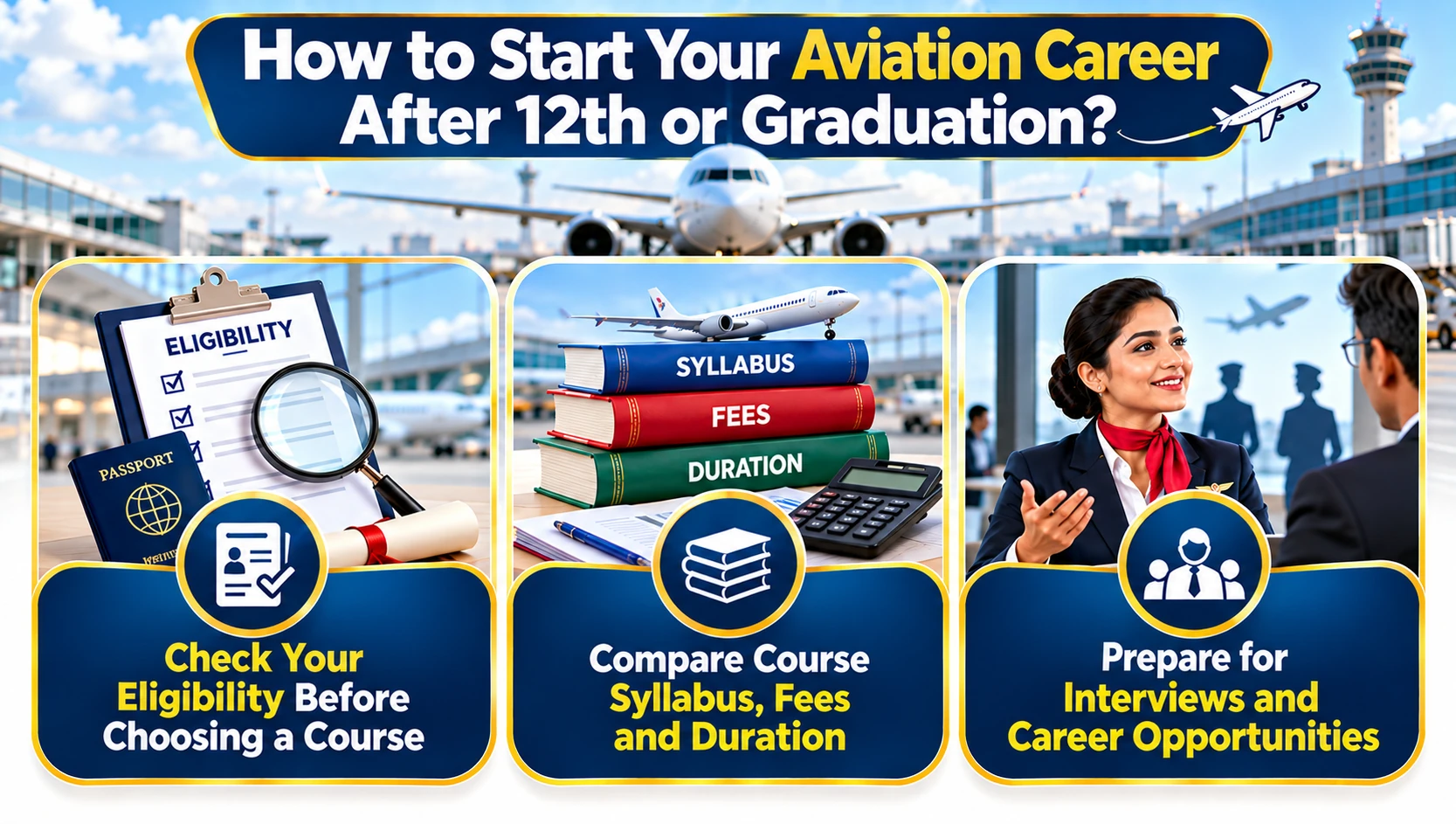
Starting an aviation career requires research, preparation and a clear understanding of the requirements for your preferred role. Students should compare training programmes and employer expectations before making a decision.
Check Your Eligibility Before Choosing a Course
Each aviation career may have different educational and professional requirements.
Before applying, check:
- Minimum educational qualifications.
- Age requirements, where applicable.
- English language proficiency.
- Medical or physical requirements, where specified.
- Any required examinations, licences or authorisations.
Requirements vary by employer, training provider and role. For regulated positions, check the applicable rules through the relevant aviation authority.
Compare Course Syllabus, Fees and Duration
Choosing a suitable training programme involves more than comparing course names.
| Course | Important Learning Areas | What to Verify |
| Cabin Crew | Safety awareness, communication and customer service | Syllabus, training activities and airline eligibility |
| Flight Dispatch | Flight planning, aviation weather and operational knowledge | Regulatory requirements, examination preparation and course scope |
| Airport Operations | Terminal processes, ground operations and coordination | Practical training, syllabus and employer requirements |
Before enrolling, request the current syllabus, total fees, course duration and details of the certificate awarded.
A training certificate does not automatically guarantee employment or meet every requirement for a professional aviation role.
Prepare for Interviews and Career Opportunities
After identifying your preferred career, start preparing for relevant recruitment opportunities.
Follow these steps:
- Research current vacancies from official airline and airport careers pages.
- Review the qualifications required for your preferred role.
- Improve your spoken and written English.
- Develop relevant technical or customer service skills.
- Prepare a clear, accurate resume.
- Practise interview questions related to your chosen career.
- Verify any required examinations or professional authorisations.
If you are exploring aviation training in Chennai, contact Logica Training School to learn about its current cabin crew, flight dispatch and airport operations programmes.
Choose a programme that matches your career goals and provides clear information about training, fees, eligibility and career support.
Conclusion
Cabin crew, flight dispatchand airport operations offer different opportunities for students interested in aviation. Cabin crew focuses on passenger safety and onboard service, flight dispatch involves flight planning and operational support, while airport operations focuses on coordinating airport activities.
The right career depends on your interests, skills, eligibility and preferred working environment. Before enrolling in a training programme, compare the syllabus, fees, duration and professional requirements.
Take time to research employers and understand the responsibilities of your preferred role. With careful preparation, you can choose an aviation training path that supports your long-term career goals.