

Introduction
Finishing Class 12 opens the door to several aviation careers, but not every student wants to become a pilot or work in a passenger-facing role. For those interested in the technical and operational side of aviation, flight dispatch offers a different path. A flight dispatcher course after 12th introduces students to the planning and operational knowledge used to support airline flights from the ground. Training typically covers areas such as aviation meteorology, navigation, flight planning, aircraft performance and operational procedures. For students who enjoy analyzing information, solving problems and understanding how airline operations work behind the scenes, flight dispatch can be a career path worth exploring. The first step is understanding whether the field matches your interests, what the training involves and how you can progress towards a career in flight operations.
Is Flight Dispatch the Right Aviation Career After 12th?
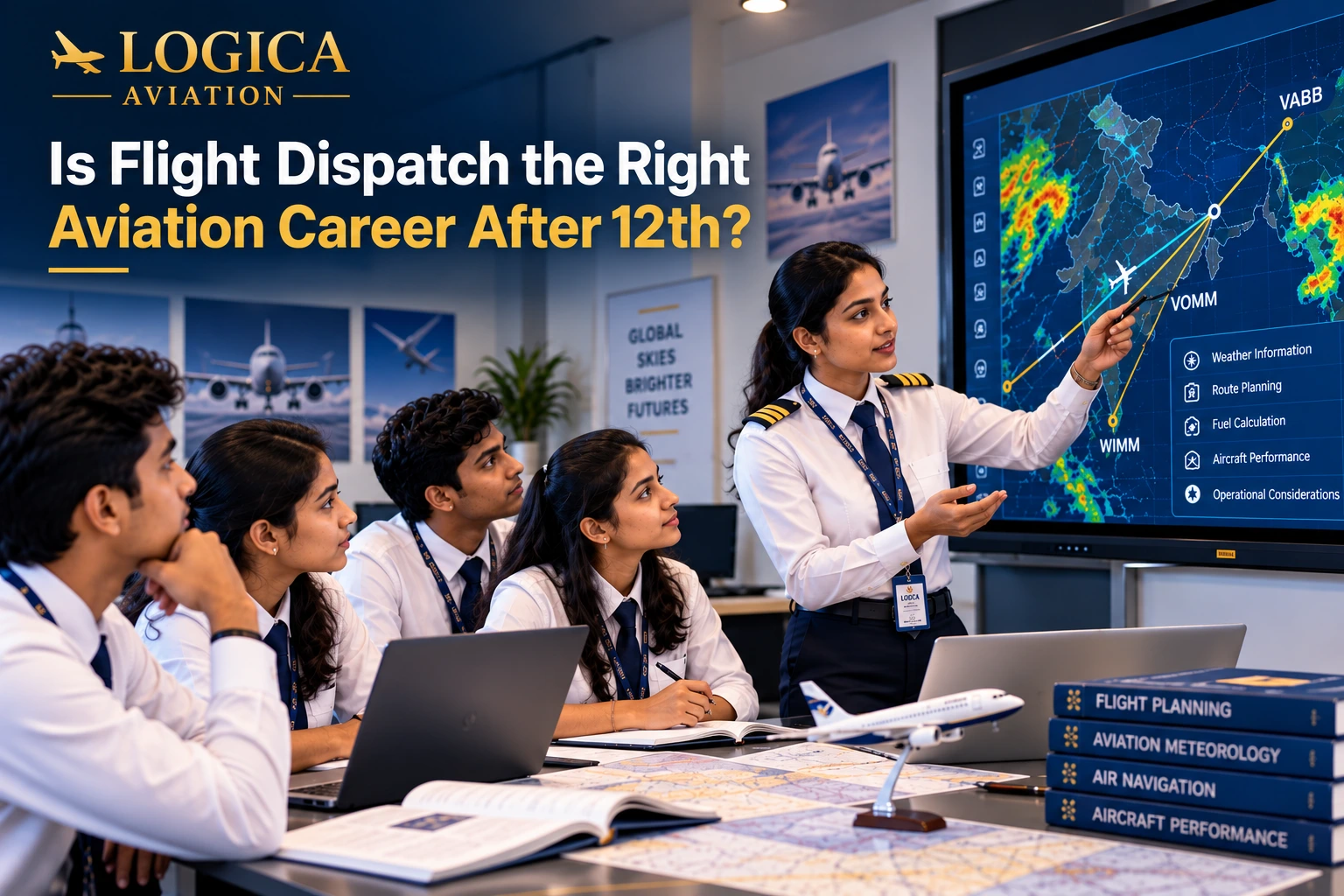
Choosing an aviation course should begin with understanding the nature of the career rather than simply selecting a popular course. Flight dispatch is particularly relevant for students interested in thetechnical, planning and operational side of aviation. It involves working with information that supports the preparation and monitoring of airline operations. Flight dispatch can be especially appealing to students who want to be part of airline operations without choosing a flying or passenger-facing role. It offers an opportunity to build technical aviation knowledge while developing skills in planning, analysis, coordination and operational decision-making.
Who Is Eligible to Start Flight Dispatcher Training?
Students who have completed Class 12 can explore flight dispatcher training, but they should distinguish between an institute’s admission criteria and the requirements associated with their intended regulatory or professional pathway. For students planning to pursue the applicable DGCA pathway, educational requirements relating to Physics and Mathematics should be checked carefully before enrolling.
A simple overview is:
| Area | What Students Should Check |
| Educational Level | Class 12 or equivalent |
| Academic Subjects | Applicable Physics and Mathematics requirements |
| Aviation Experience | Usually not required to begin training |
| Mathematical Ability | Helpful for technical aviation concepts |
| English Communication | Important for understanding aviation information |
| Computer Knowledge | Useful for modern aviation training and operations |
Eligibility should therefore be treated as more than simply being a “12th-pass student.” Students should check whether their academic background matches the professional pathway they ultimately want to pursue. Doing this before joining a program can prevent confusion later and help students choose training that aligns with their long-term aviation goals.
What Makes Flight Dispatch Different From Other Aviation Careers?
Many students associate aviation careers primarily with pilots, cabin crew or airport ground staff. Flight dispatch takes students into a different part of the industry: airline operations. Instead of flying the aircraft or directly serving passengers, flight dispatch professionals work with operational information used to support flights.
The field may particularly interest students who enjoy:
- Understanding how aircraft routes are planned
- Analysing how weather can affect operations
- Working with technical information and calculations
- Following structured aviation procedures
- Solving operational problems
- Working in a team-based airline environment
This makes flight dispatch quite different from customer-service-oriented aviation careers. Rather than choosing a course simply because you want to “work at an airport,” it is better to choose flight dispatch because the technical nature of airline operations genuinely interests you.
What Does Flight Dispatcher Training Prepare You For?
Once students enter training, the focus moves from general aviation awareness to understanding the technical information behind airline operations. A well-structured flight dispatcher training program should help students understand not only individual aviation subjects but also how those subjects connect during operational situations. Flight dispatcher training prepares students to understand how technical information is used to support safe and efficient airline operations. It builds practical knowledge in areas such as flight planning, weather analysis, navigation, aircraft performance and operational coordination.
From Weather to Flight Planning: The Technical Skills You Build
Flight dispatch brings together several technical areas of aviation. Each subject contributes a different piece to understanding how a flight is prepared and supported.
| Training Area | What You Learn | Why It Matters |
| Aviation Meteorology | Weather reports, forecasts and conditions | Weather can influence flight planning and routing |
| Air Navigation | Routes, positions and navigation concepts | Builds understanding of aircraft movement between airports |
| Flight Planning | Route, fuel and operational considerations | Connects different pieces of flight information |
| Aircraft Performance | Aircraft capabilities and limitations | Helps students understand operational restrictions |
| Mass and Balance | Aircraft weight and distribution | Introduces important aircraft loading principles |
| Air Regulations | Aviation rules and procedures | Builds regulatory awareness |
| Operational Procedures | Airline operating processes | Explains how flight operations are coordinated |
The real learning happens when students begin connecting these subjects. For example, weather conditions may affect the preferred route for a flight. A route change may alter the distance flown, which can influence fuel planning and other operational considerations. Students therefore move beyond memorizing individual definitions and begin understanding how one operational factor can affect another. That ability to connect information is an important part of developing an airline-operations mindset.
How Practical Training Turns Aviation Theory Into Operational Skills
Knowing what meteorology or navigation means is different from knowing how that information is interpreted in an operational situation. This is where practical learning becomes valuable. Depending on the program, students may gain exposure through activities such as:
- Interpreting aviation weather information
- Reading aeronautical charts
- Preparing sample flight plans
- Working through fuel-planning exercises
- Practising mass and balance calculations
- Reviewing aircraft performance information
- Understanding operational documents
- Working through simulated flight scenarios
Consider a training scenario where weather conditions at the destination change. Instead of simply identifying the weather report, students can examine what that information means for the planned operation and how different factors may need to be reconsidered. This type of scenario-based learning helps students progress from “I know the aviation concept” to “I understand how the concept can be applied.” That distinction is important when preparing for an operational aviation environment.
Curious about what happens behind every successful flight? Explore Flight Dispatcher Training at Logica Aviation and develop your aviation knowledge through structured learning and practical exposure.
What Is the Career Path After a Flight Dispatcher Course?
Completing a flight dispatcher course is an important learning milestone, but it should be viewed as the beginning of the professional journey rather than the final destination. Students need to combine technical knowledge with the applicable regulatory requirements, practical ability and industry experience as they progress towards professional aviation opportunities. After completing flight dispatcher training, students can progress by meeting relevant regulatory requirements and gaining practical experience in airline operations. With the right qualifications and skills, they can explore opportunities in flight dispatch, flight planning, operational support, and airline Operations Control Centers (OCC).
How to Become a Flight Dispatcher After 12th
For students researching how to become a flight dispatcher after 12th, the pathway can be understood as a progression rather than a single qualification.
| Stage | What to Focus On |
| 1. Complete Class 12 | Ensure your educational background meets the requirements of your intended pathway |
| 2. Join Flight Dispatcher Training | Build technical knowledge of flight operations |
| 3. Develop Practical Skills | Apply concepts through exercises and operational scenarios |
| 4. Understand Regulatory Requirements | Check and complete requirements applicable to your intended professional pathway |
| 5. Prepare for Recruitment | Strengthen aviation knowledge, communication and interview readiness |
| 6. Build Operational Experience | Gain relevant exposure to aviation operations |
| 7. Progress Professionally | Develop deeper operational knowledge and responsibility with experience |
This distinction is important for students and parents. Completing a course provides the training foundation, while eligibility for particular professional responsibilities or jobs can involve additional regulatory, qualification and employer requirements. Students should therefore evaluate training based on the knowledge and practical foundation it provides rather than viewing the course certificate alone as the final career objective.
Career Opportunities After Flight Dispatcher Training

Flight dispatcher training develops knowledge that can also be relevant to the wider airline operations environment. Depending on qualifications, regulatory requirements, experience and individual employer criteria, candidates may explore opportunities connected with:
- Flight dispatch
- Flight operations support
- Operations Control Centre (OCC)
- Flight planning support
- Airline operational coordination
- Related aviation operations functions
An Operations Control Centre (OCC) is an important environment within airline operations because different operational information and teams come together to support the airline’s day-to-day flying program. This means career development can happen gradually. A candidate may begin by developing operational exposure and understanding airline processes. As qualifications, technical knowledge and experience increase, opportunities involving greater operational responsibility may become available. Students should keep in mind that completing training does not automatically guarantee a particular airline position. Recruitment depends on factors such as eligibility, qualifications, applicable regulatory requirements, vacancies, practical capability and individual employer selection processes.
Conclusion
A flight dispatcher course after 12th can open the door to an aviation pathway that goes far beyond what passengers see at an airport. Students entering this field learn how weather, navigation, aircraft performance, flight planning and operational procedures come together within airline operations. More importantly, they begin developing the ability to interpret information and understand how different operational factors are connected. Before choosing a course, students should confirm their eligibility, understand the professional pathway they want to follow and look for training that balances technical knowledge with practical exposure.
For students who are interested in aviation but prefer planning, analysis and operational work to a passenger-facing career, flight dispatch can be an interesting path to explore after Class 12. Ready to explore the operational side of aviation? Discover Flight Dispatcher Training at Logica Aviation and take the first step towards building the technical knowledge and practical skills needed for a career in flight operations.