
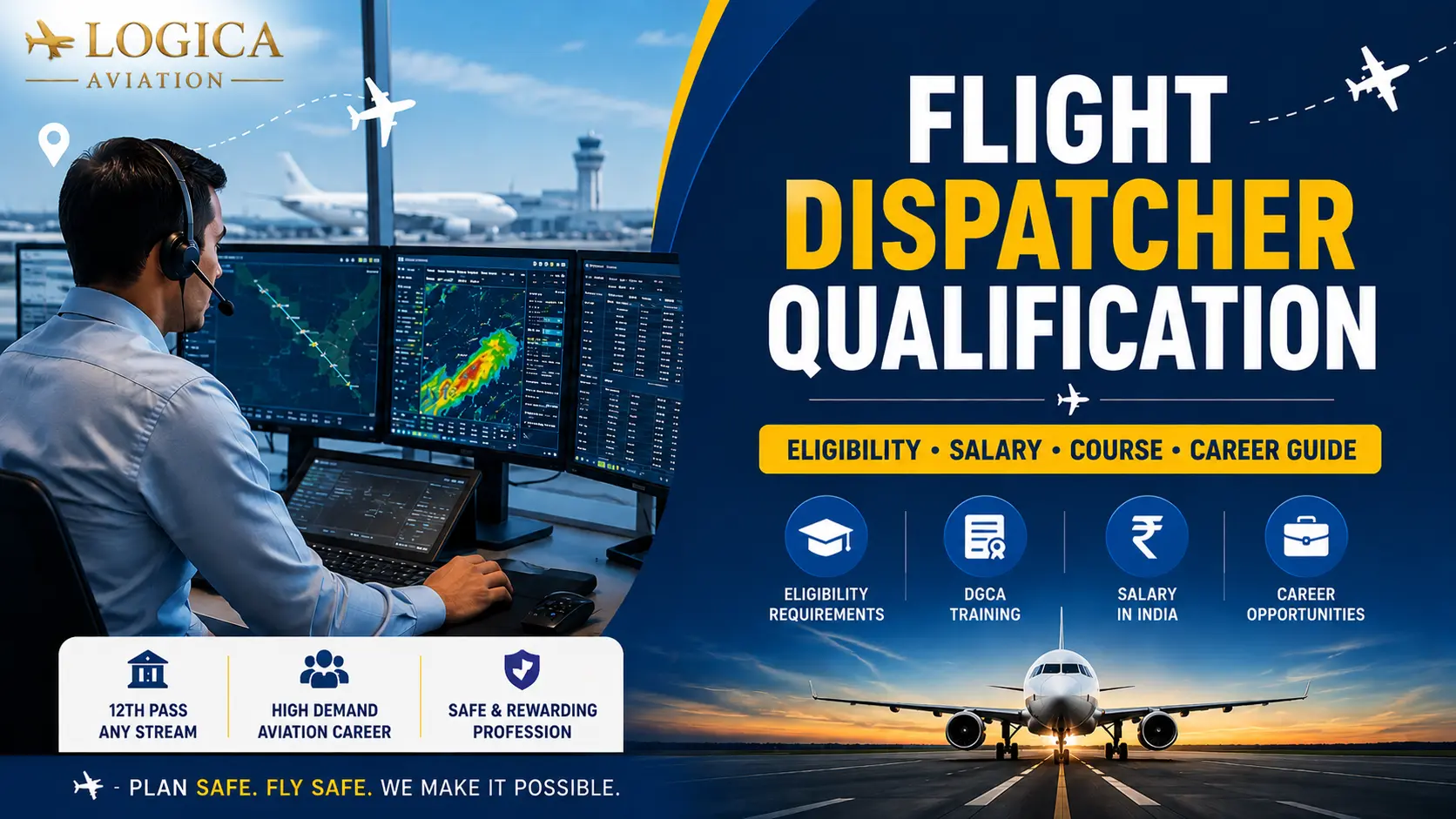
Introduction:
Starting a career in aviation can feel confusing for many students, especially when exploring non-pilot roles like a flight dispatcher. Many aspirants often ask, “what qualifications are required for flight dispatcher careers?” A flight dispatcher plays a critical role in airline operations by planning routes, monitoring weather conditions, managing fuel calculations, and supporting pilots for safe flights. With India becoming the world’s third-largest domestic aviation market, airline operations are expanding rapidly, creating strong demand for trained aviation professionals. (The Economic Times) According to the International Air Transport Association (IATA), global passenger demand increased by 8% in 2025, highlighting continuous aviation growth worldwide. (IATA) To meet airline safety standards, industry experts recommend structured aviation training programs that provide practical operational knowledge and industry-focused learning. Understanding the right flight dispatcher qualification can help students confidently enter this fast-growing aviation career path.
Who Is a Flight Dispatcher in the Aviation Industry?

A flight dispatcher is an important aviation professional who works from the ground and supports pilots in ensuring every flight operates safely, efficiently, and on schedule. Often called the “co-pilot on the ground,” a dispatcher manages critical operational tasks before and during a flight. Their responsibilities include planning flight routes, monitoring weather conditions, calculating fuel requirements, coordinating with pilots and air traffic control, and preparing flight release documents.
According to global aviation workforce reports, airlines manage more than 100,000 flights daily worldwide, increasing the need for skilled dispatch professionals in airline operations. Unlike pilots who control the aircraft in the sky, flight dispatchers handle operational decision-making from the ground.
Main Responsibilities of a Flight Dispatcher
A flight dispatcher handles the complete “ground control” of a flight operation, ensuring every aircraft takes off, flies, and lands safely and efficiently. Airlines depend on them heavily because even a small calculation error can impact safety, delays, or fuel costs. In fact, aviation studies show that optimized flight planning can reduce fuel consumption by up to 10-15% per flight, making dispatchers crucial for airline profitability and safety.
Responsibilities:
Flight Planning
Design safe and efficient flight routes based on distance, airspace, and regulations.
Weather Monitoring
Track real-time weather updates before and during flights.
Fuel Calculation
Calculate exact fuel requirements including reserves for emergencies.
Ensure aircraft carries enough fuel without unnecessary extra weight.
Route Analysis
Compare multiple flight paths for time, safety, and cost efficiency.
Coordinating with Pilots
Share flight release documents and updates before departure
Together, these responsibilities make flight dispatchers a critical backbone of modern airline operations
Difference Between Flight Dispatcher and Pilot
Many beginners in aviation get confused between a flight dispatcher and a pilot because both roles work closely to ensure a safe flight. However, their responsibilities, work environment, and training paths are completely different. A pilot flies the aircraft, while a flight dispatcher manages the entire flight from the ground.
To put it simply, a pilot handles “in-air execution,” and a dispatcher handles “pre-flight and operational decision-making.” Both roles depend on each other for safe and efficient airline operations.
Comparison Table
Both careers are highly respected, but flight dispatchers offer a ground-based aviation career for students who want aviation exposure without becoming pilots.
Why Flight Dispatchers Are Important for Airline Safety
Flight dispatchers play a major role in keeping every flight safe, efficient, and well-controlled. In modern aviation, airlines don’t rely only on pilots-dispatchers actively support decision-making before and during every flight. In fact, global aviation safety systems depend on strict coordination between pilots and dispatchers to manage thousands of flights daily with minimal risk.
Why They Matter:
Operational Efficiency
Dispatchers optimize flight routes to save time and reduce delays.
Example: A Chennai–Mumbai flight may be rerouted to avoid heavy air traffic, saving 15-20 minutes of flying time.
Safety Compliance
They ensure every flight follows DGCA and international aviation rules.
They check aircraft performance, weather risks, and airspace restrictions before takeoff.
Emergency Support
During unexpected situations like storms or technical alerts, dispatchers guide pilots with alternative routes.
Example: If turbulence is reported mid-route, they immediately suggest safer altitude changes.
Fuel Management
They calculate precise fuel requirements, including safety reserves.
Studies show optimized dispatch planning can reduce fuel usage by up to 10%, significantly lowering airline operational costs.
Think of a flight dispatcher as the “safety strategist” of aviation. While pilots handle the aircraft in the sky, dispatchers ensure everything is perfectly planned on the ground.
Flight Dispatcher Qualification Requirements in India

If you want to start a career as a flight dispatcher, you don’t need to become a pilot, but you must meet specific educational and skill requirements. Airlines look for candidates who understand aviation basics, can handle pressure, and make quick decisions that impact flight safety and efficiency.
According to aviation industry training standards, employers prefer candidates with structured dispatcher certification and practical operational exposure. Airlines also report that well-trained dispatchers improve operational efficiency and reduce flight delays significantly.
Understanding the right flight dispatcher qualification is the first step toward entering this high-responsibility aviation career.
Minimum Educational Qualification
To become a flight dispatcher, you don’t need an aviation degree or a science background. Airlines mainly focus on basic education, communication ability, and willingness to learn aviation operations. This makes the career accessible for students from different streams.
Basic Education Requirements
10+2 completion (Higher Secondary education) is mandatory
Students from any stream (Science, Commerce, or Arts) can apply
No requirement for prior aviation experience
Diploma or certification in aviation adds strong advantage
Essential Skill Requirements Along with Education
English communication skills
You must clearly communicate with pilots, ATC, and airline operations teams
Example: Sharing urgent weather updates during a flight delay situation
Basic computer knowledge
Understanding flight planning software and spreadsheets
Handling scheduling tools and operational systems used in airlines
According to aviation training institutes aligned with DGCA standards, over 60% of entry-level aviation ground staff and dispatch trainees come from non-science backgrounds. This shows that aviation is an open career path for all streams.
If you have completed 12th standard and can communicate well in English, you already meet the basic starting point for a flight dispatcher career.
Age Limit and Eligibility Criteria
Becoming a flight dispatcher does not involve very strict entry barriers, but many aviation training institutes report that a large number of dispatcher trainees come from non-science backgrounds. Since dispatchers work in fast-paced operational environments, they need maturity, communication skills, and quick decision-making ability. Their decisions directly impact passenger safety, airline efficiency, and overall flight performance, making them an essential part of every successful airline operation.
Eligibility Criteria Table
Aviation training institutes report that nearly 70% of entry-level dispatch trainees begin their careers immediately after 12th, showing strong accessibility in this field.
If you are 18+, completed 12th, and can communicate in English, you already meet the basic eligibility to start your flight dispatcher journey.
Skills Needed to Become a Flight Dispatcher
A flight dispatcher needs more than just academic qualification-they need strong operational skills to manage real-time airline decisions. Since they support pilots and airlines during every phase of a flight, even small mistakes can affect safety, timing, and fuel efficiency.
Skills Required:
Communication Skills
Dispatchers constantly coordinate with pilots, cabin crew, and ATC.
Example: Sharing urgent route changes due to sudden weather alerts.
Analytical Thinking
They study routes, air traffic, and aircraft performance data.
Example: Choosing a faster route for a Chennai–Delhi flight while avoiding congestion zones.
Decision-Making
Quick decisions help avoid delays and safety risks.
Example: Rerouting flights during cyclone warnings within minutes.
Weather Interpretation
Understanding aviation weather charts and forecasts is essential.
Dispatchers analyze wind speed, turbulence, and visibility reports.
Team Coordination
They work closely with pilots and airline operations teams for smooth flight execution.
Trainer & Airline Expectations
Experienced aviation trainers often highlight that airlines prioritize candidates who can handle pressure and communicate clearly. Airlines expect dispatchers to act fast, stay accurate, and maintain calm during emergencies.
If you develop strong communication, analytical thinking, and decision-making skills, you can successfully enter the flight dispatcher career path even as a fresher.
Flight Dispatcher Course Details in India
A flight dispatcher course in India trains students in airline operations, flight planning, safety coordination, and real-time aviation decision-making. The course prepares candidates to handle operational responsibilities that airlines expect from aviation ground staff professionals.
Most flight dispatcher courses in India last between 6 to 12 months, depending on the institute and training structure. The program usually combines classroom learning with practical simulator training to help students understand real airline operational scenarios.
A professional dispatcher course helps students build strong operational knowledge, improve aviation communication skills, and prepare for fast-paced airline environments where safety, accuracy, and quick decision-making play a critical role.
Subjects Covered in Flight Dispatcher Training
A flight dispatcher training program covers all the core aviation subjects that help students understand how airlines plan and manage safe flights. These subjects build strong operational knowledge and prepare learners for real airline environments where accuracy and timing matter.
Key Subjects in Training:
Learn how weather impacts flight safety and routing.
Navigation
Study flight routes, airspace structure, and global positioning systems..
Air Regulations
Ensures every flight follows safety and legal standards.
Aircraft Performance
Understand how aircraft weight, fuel, and weather affect flight efficiency.
Flight Planning Systems
Use digital tools and software for route planning and fuel calculation.
Aviation training institutes report that students who master these subjects improve operational accuracy by up to 40% during simulation exercises, showing how important structured training is for airline readiness.
These subjects together shape a skilled flight dispatcher who can support pilots, improve safety, and ensure smooth airline operations in real-time conditions.
Course Duration and Training Process
A flight dispatcher course in India follows a structured training process that builds both theoretical knowledge and real-world airline operational skills. Most institutes design the program to prepare students for fast-paced airline environments where accuracy and timing matter every minute.
Timeline Format:
Theory Training (2-3 Months)
Aviation meteorology basics
Air navigation and air regulations
Aircraft performance theory
Flight planning concepts
Simulator Exposure (1-2 Months)
Flight planning software practice
Weather analysis simulations
Emergency scenario handling
Practical Sessions (2-3 Months)
Live flight planning exercises
Fuel calculation practice
Route optimization tasks
Team coordination drills
Internship Opportunities (1-2 Months)
Real-time flight operations experience
Exposure to dispatch centers
Industry workflow understanding
Aviation training data shows that students with simulator and internship exposure perform up to 35% better in airline placement interviews compared to theory-only learners.
Industry-Oriented Aviation Training and Its Importance
Professional aviation training plays an important role in building a successful flight dispatcher career in India. Airlines prefer candidates who understand flight operations, safety procedures, operational coordination, and real-time decision-making skills required in airline environments.
Why Industry-Focused Training Matters
Builds strong operational knowledge
Improves airline interview readiness
Prepares students for real flight operations
Develops safety awareness and coordination skills
Airline Hiring Preferences
Airlines prefer candidates who understand:
Flight planning procedures
Aviation safety practices
Weather monitoring basics
Emergency coordination systems
For example, airlines often shortlist trainees with simulator exposure and practical operational training over candidates with only theoretical aviation knowledge.
Career Opportunities After Flight Dispatcher Training

Flight dispatcher training offers strong career opportunities in airlines, airport operations, and aviation management companies. As India’s aviation industry grows rapidly, airlines need trained professionals to manage flight safety and operational efficiency.
Domestic airlines, cargo operators, international carriers, and airport operation companies regularly hire dispatch professionals. With experience, candidates can move into senior operational and aviation management positions.
This career provides stable growth, aviation industry exposure, and long-term opportunities for students interested in airline operations and safety management.
Job Roles Available
After completing flight dispatcher training, students can explore several aviation career opportunities in airline operations and airport management. Airlines need skilled ground operation professionals to manage scheduling, flight safety, and operational coordination efficiently. With India’s aviation market expanding rapidly, demand for trained aviation operations staff continues to increase every year.
Popular Job Roles After Training:
Flight Dispatcher
Plans flight routes, monitors weather, and calculates fuel requirements.
Flight Operations Officer
Monitors flight timings, crew updates, and operational safety procedures.
Crew Scheduler
Manages pilot and cabin crew schedules according to aviation regulations.
Airline Operations Executive
Supports airport and airline operational activities.
Aviation industry reports show that airline operations and ground management roles continue growing alongside increasing domestic and international flight traffic in India.
Flight Dispatcher Salary in India
Flight dispatcher salaries in India continue to increase due to rapid airline expansion and growing air passenger traffic. Airlines actively hire trained aviation operations professionals to manage flight safety, route planning, and operational efficiency. Salary packages mainly depend on experience level, technical knowledge, certification quality, and operational skills.
Average Flight Dispatcher Salary in India
India’s aviation industry continues expanding rapidly, with domestic passenger traffic growing significantly each year. This growth increases demand for trained dispatchers and aviation operations professionals across airlines and airport operations sectors.
Airlines and Aviation Companies Hiring Dispatchers
Flight dispatchers receive job opportunities across domestic airlines, international carriers, cargo aviation companies, and airport operation sectors.
Major Aviation Sectors Hiring Flight Dispatchers
Domestic Airlines
Indian airlines hire dispatchers to handle flight planning, weather monitoring, and operational control.
Examples: IndiGo, Air India, Akasa Air
Cargo Operators
Cargo aviation companies need dispatchers for freight scheduling, fuel management, and route planning.
Examples: Blue Dart Aviation, FedEx Express
International Airlines
International carriers recruit dispatch professionals for global flight operations and safety coordination.
Examples: Emirates, Qatar Airways, Singapore Airlines
Airport Operation Companies
Airport operators hire aviation operations staff to coordinate airline movements and flight schedules.
Examples: Airports Authority of India, Adani Airport Holdings.
Conclusion
A flight dispatcher career offers excellent opportunities in airline operations, flight planning, and aviation safety. With the right qualification and DGCA-oriented training, students can build successful careers in the growing aviation industry.
Choosing a trusted aviation institute with practical training and experienced instructors helps students become industry-ready faster. As airline operations continue expanding in India, demand for trained dispatch professionals also continues increasing.
If you want to start your aviation career, now is the right time to apply for flight dispatcher training and connect with aviation experts in Chennai.
FAQ
1.What qualifications are required for flight dispatcher?
Candidates usually need 10+2 qualification, English communication skills, and basic computer knowledge to join flight dispatcher training.
2.Can I become a flight dispatcher after 12th?
Yes. Students from Science, Commerce, or Arts streams can start flight dispatcher training after completing 12th.
3.Is professional aviation training important for flight dispatchers?
Yes. Structured aviation training improves operational knowledge, practical skills, and airline job opportunities for aspiring flight dispatchers.
4.What is the salary of a flight dispatcher in India?
Freshers usually earn around ₹2.5–4 LPA, while experienced professionals can earn ₹8+ LPA.
5.Which is the best flight dispatcher institute in Chennai?
The best institute should offer practical training, experienced instructors, simulator exposure, and placement assistance.
6.How long is a flight dispatcher course?
Most flight dispatcher courses in India take around 6–12 months depending on the institute and training structure.
7.Is maths compulsory for flight dispatcher training?
No. Basic calculations are enough, and advanced mathematics is not compulsory.
8.What skills are important for flight dispatchers?
Communication, analytical thinking, decision-making, weather interpretation, and teamwork are important skills.
9.Are flight dispatchers in demand in India?
Yes. Growing airline operations and rising passenger traffic continue increasing demand for dispatch professionals.
10.Can freshers get airline jobs after dispatcher training?
Yes. Many airlines and aviation companies hire freshers after certified flight dispatcher training.